
I’ll be honest: I don’t come to dark fantasy action-RPGs for comfort. I come for the feeling of walking into a world that has already made up its mind about me, and it has decided I am lunch. Picking one of these games is like choosing a lantern for a cave: brightness matters, but so does how the shadows behave around it. In 2026, the genre is crowded enough that a list needs rules. For me, the setting has to bite, the combat has to feel good in real time, and the progression has to let me build a character that is mine, not a spreadsheet’s idea of me. Here’s the shortlist I’d hand to a friend who wants steel, sorcery, and a little dread.
Path of Exile is the most demanding entry here. It launched in 2013, but in 2026 it’s a different animal: years of major updates, including Settlers of Kalguur, have turned Wraeclast into a brutal, beautiful continent with more systems than I can hold in my head at once. That is both the appeal and the warning. If you like the idea of a ‘more hardcore Diablo,’ this is your poison. The build flexibility is absurd, the skill gems are a toy box, and the game rewards players who are willing to learn. It is not a couch nap; it is a hobby you can disappear into.
Dragon’s Dogma 2 is the one that makes me feel underpowered and constantly improvising. Its open world has rough edges, and the limited fast travel can feel like a test of patience, but the combat is worth it. I can grab a goblin, hurl it at its friend, climb a cyclops, and stab a weak spot while the whole thing turns into a messy, spectacular argument. The Pawn system gives me a party of weirdos with classes that complement mine, and the huge cities and monsters—dragons, griffins, sphinxes, medusas—give the journey real texture. It is not the smoothest game on this list, but it is one of the most physical.
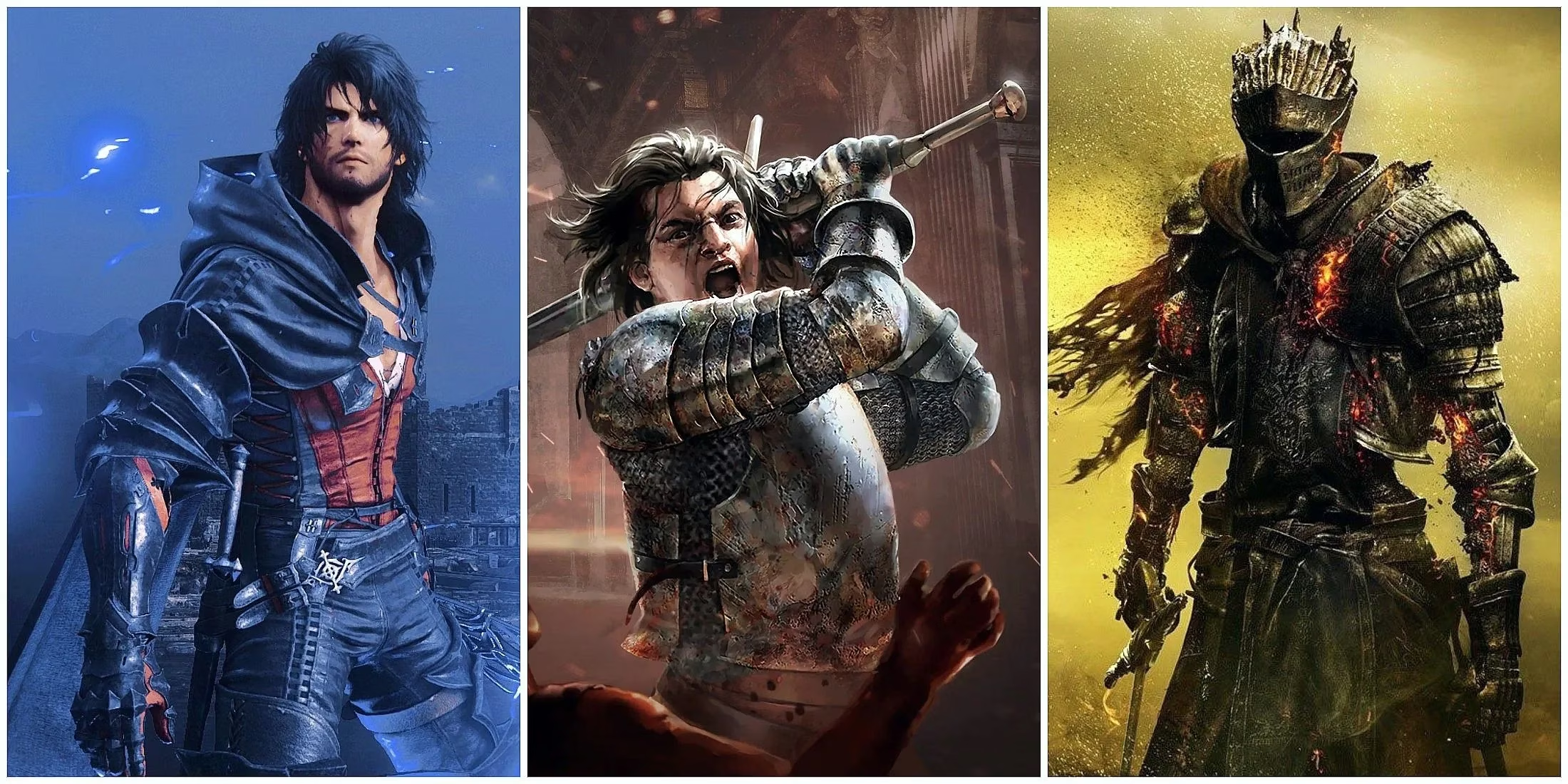
Final Fantasy 16 is the spectacle-first entry of the group. Valisthea is political, gloomy, and clearly inspired by Game of Thrones, and the Eikon fights are the kind of set piece I want to watch with my mouth open. The combat is fast and flashy, closer to Devil May Cry than to a classic party-based RPG, but it is also the least flexible build system here. I can swap skills around, yet I never feel like I’m cooking a truly strange character. That is fine if I want spectacle. It is less fine if I want a laboratory. Still, those kaiju-sized boss battles are a pinnacle of the genre for a reason.
Diablo 4 is the one I recommend when someone wants the familiar rhythm of an isometric ARPG with a proper dark atmosphere. Blizzard nailed the mood: Sanctuary is grim, the music is excellent, and the combat has that easy-to-learn, hard-to-put-down loop. The Vessel of Hatred expansion is no longer a future promise in 2026; it is part of the current package, adding a new region, class, and more reasons to grind. Season 4 gave the itemization and progression a meaningful shake, and the game is better for it. It is not the deepest well on this list, but it is a very good place to lose a weekend.
Dark Souls 3 is still my go-to answer for someone who has never touched a Souls game and wants to understand the fuss. Lothric is packed with memorable places, enemies, stories, and bosses, and the two DLCs—Ashes of Ariandel and The Ringed City—contain some of the best fights in the trilogy. The game is punishing and rewarding in equal parts, and it hides entire areas behind secrets. I would not call it friendly. I would call it fair in a harsh way: it will fail you until you learn, and then it will let you feel like a hero.
Bloodborne is the one that refuses to be a normal dark fantasy. It is Lovecraftian horror, Victorian gothic architecture, and lore so deep that I still feel like I’m reading a transcript of a dream. The combat is faster and more aggressive than Dark Souls, built around parries and fluid movement, and the weapons are some of the most memorable designs in the genre. Bloodborne’s combat is a fencing match held inside a nightmare’s ribcage: elegant, violent, and deeply strange. More than a decade later, it still feels one of a kind.
The Witcher 3: Wild Hunt is the veteran of the group, and it still shapes the conversation. Almost every new dark fantasy game gets compared to it, and most of them fall short for a simple reason: The Witcher 3 is stuffed with stories and characters that make the world feel lived in. The tone can shift from cozy to terrifying in a blink, and the visuals and music hold up beautifully. The combat is the weak link—it can run out of steam long before the hundred-hour mark—but the three progression paths and weapon perks still give me room to tinker. It is a classic for a reason, even if I now play it more for the quests than the swordplay.
Elden Ring is the one I keep coming back to. It takes the Soulslike formula and opens it into a vast dark fantasy world full of menacing bosses, hidden dungeons, and build options I will never exhaust. The Shadow of the Erdtree expansion is now well established, and it adds another layer of mystery and challenge. Elden Ring is a cathedral made of secrets; every pillar I lean on turns out to be a door. It is not just one of the best dark fantasy action-RPGs in 2026; it is a benchmark for scope and confidence.
Here’s the quick version I’d text to a friend:
| Game | What I love | The catch | Best for |
|---|---|---|---|
| Path of Exile | Absurd build depth and endless updates | Steep learning curve | Tinkerers 🧠 |
| Dragon’s Dogma 2 | Physical, chaotic combat and Pawns | Rough edges and travel friction | Adventurers 🐉 |
| Final Fantasy 16 | Eikon spectacle and cinematic fights | Limited build variety | Blockbuster fans 🎬 |
| Diablo 4 | Dark mood and smooth ARPG loop | Less build freedom than PoE | Loot nights 🎮 |
| Dark Souls 3 | Great bosses and tight level design | Punishing for newcomers | First Souls challenge 🗡️ |
| Bloodborne | Unique gothic-Lovecraftian vibe | No true sequel in sight | Horror romantics 🩸 |
| The Witcher 3 | Stories and world-building | Combat can wear thin | Narrative wanderers 🕯️ |
| Elden Ring | Open-world mystery and build variety | Can overwhelm | Explorers 🌒 |
If I had to pick one for a desert island in 2026, I’d take Elden Ring for the sheer number of doors hidden in its walls. If I wanted a game to live in with friends and spreadsheets, I’d take Path of Exile. And if I wanted a reminder that dark fantasy can still feel intimate, I’d replay Bloodborne and let Yharnam do what it does best: make me feel small, curious, and very glad the lights are on.