
The recent unveiling of Diablo 4's 2025 roadmap has sparked significant backlash within the game's community, with players expressing widespread frustration over what they perceive as a lack of substantial new content and a repetitive seasonal model. Blizzard's director of social and content marketing, Adam Fletcher, has since stepped forward to address the growing discontent. In a public statement, Fletcher acknowledged the concerns but urged players to remain patient, hinting that the revealed plans are not the complete picture for the year. He assured the community that the studio has "some good surprises" in store, details of which will be unveiled later as development progresses. This response comes at a critical time for Diablo 4, a game that launched in 2023 to commercial success but has been consistently shadowed by player controversy and technical challenges.
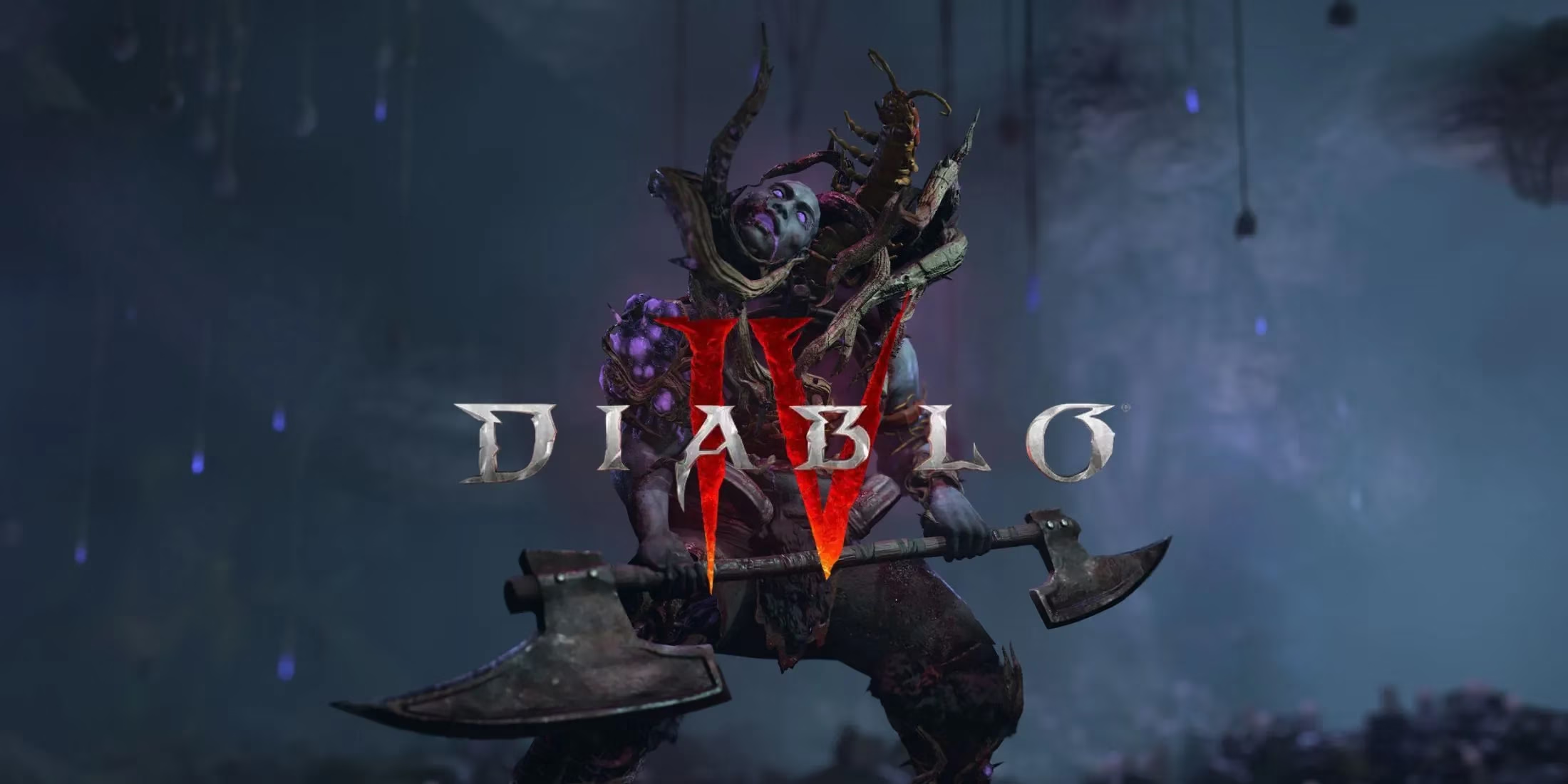
The player backlash following the roadmap reveal has been vocal and pointed. Community feedback has centered on several core complaints:
😠 Perceived Lack of Innovation: Many players feel the seasonal content has become formulaic, accusing the development team of a "copy-and-paste" approach from previous seasons.
⚖️ Balance and Progression Concerns: A notable absence of significant skill tree improvements and ongoing class balance issues have been highlighted as major pain points.
💡 "Shadow of Their Former Self": Some long-time fans have expressed a sentiment that Blizzard's creativity and investment in Diablo 4 have diminished, a stark contrast to the studio's historical reputation.
Fletcher's attempt to temper this frustration by promising future surprises has been met with a mixed reception. While some in the community are adopting a "wait-and-see" approach, others remain skeptical, questioning whether these surprises will be substantial enough to address the fundamental criticisms of the game's core seasonal loop. The situation underscores the high expectations and passionate investment of the Diablo player base.
Looking beyond the current controversy, Blizzard has officially outlined several key additions slated for Diablo 4 in 2025. These confirmed elements represent the known pillars of the year's content strategy:
| Confirmed 2025 Content | Description |
|---|---|
| Witchcraft Powers | A new form of player power or class mechanic, though specific details remain scarce. |
| New Collaborations | Cross-over events or content with other franchises, a growing trend in live-service games. |
| Permanent Additions | New features or systems intended to become staple parts of the game, not just seasonal. |
| New Ranking System & Leaderboards | Competitive infrastructure aimed at enhancing the endgame for dedicated players. |
Furthermore, the developer has already teased a more distant horizon, confirming that a new expansion is planned for 2026. This long-term planning indicates Blizzard's commitment to Diablo 4 as a continuing live service, even as it navigates the short-term turbulence of player sentiment.
The road for Diablo 4 since its 2023 launch has been far from smooth. Initial success was quickly challenged by a series of technical issues that required multiple patches and updates. The game later found a stronger footing, notably achieving a record of 55,561 concurrent players on Steam following the release of the Vessel of Hatred expansion. However, new controversies emerged, such as the disappointment surrounding the Dark Citadel raid-like experience in the DLC, which did not support local couch co-op—a significant issue for players who enjoy the Infernal Hordes mode that way. This pattern of achievement followed by community friction has become a recurring theme, making the management of the 2025 roadmap particularly crucial for Blizzard's reputation.
The central question now is whether Blizzard's promised "surprises" will be sufficient to bridge the gap between player expectations and the delivered roadmap. The community's core grievances suggest a desire for more than just new content; they are asking for evolution in the game's foundational systems and a fresher experience each season. Fletcher's explanation that details become "scarce" further into the year because assets are "still in development" is a standard reality of game development, but it does little to placate a community hungry for transparency and clear vision.
In conclusion, Diablo 4 stands at a crossroads in 2025. The confirmed content—witchcraft powers, collaborations, and new systems—provides a framework, but the player reaction indicates this framework may feel insubstantial without more transformative changes. Blizzard's strategy now hinges on the nature and impact of its unrevealed surprises. Success will depend on delivering innovations that genuinely refresh the gameplay experience and demonstrate a responsive, creative investment in the title. As the year unfolds, all eyes will be on Blizzard to see if it can successfully navigate this challenge, win back disillusioned players, and solidify Diablo 4's legacy for the future.