
Back in 2024, the world of Sanctuary found itself in a bit of a pickle. A massive duplication glitch in Diablo 4 sent shockwaves through the community, forcing Blizzard to take drastic action: shutting down trading entirely. For an action RPG where loot is king, this was like cutting off the water supply to a desert. The move was drastic, but it was the only way to keep the game's economy from going belly up. Fast forward to 2026, and the incident remains a textbook example of how a single exploit can bring a live-service game to its knees. 🎮⚔️
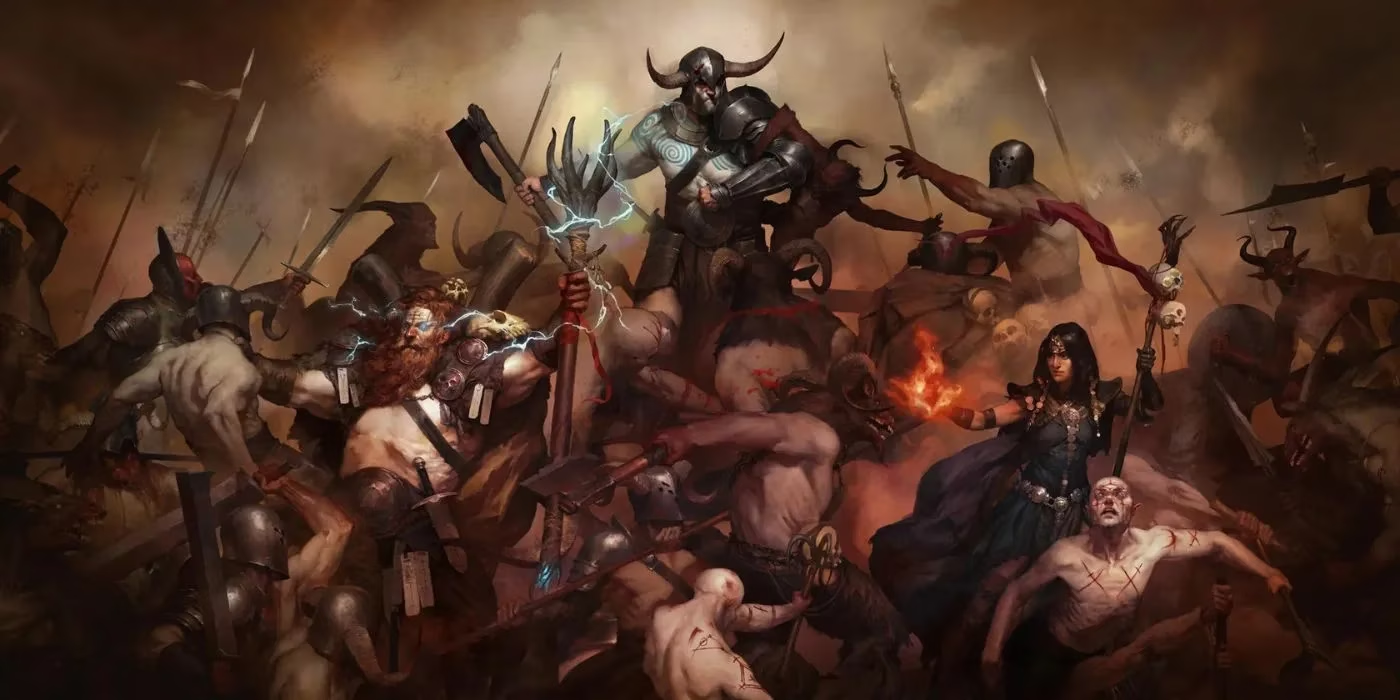
According to a Reddit post by user Mosaic78, the exploit was a 'massive' dupe glitch that allowed players to create copies of 'just about anything and everything.' The method? Spamming the option to open and close one's stash when leaving a group. It was a simple, almost laughably easy trick that could flood the game with top-tier equipment faster than you can say 'loot piñata.' Blizzard, not wanting to spill the beans on the exact mechanics, confirmed on the Diablo 4 forums that trading was disabled while the studio investigated. The community, as expected, had a field day. Reddit threads exploded with memes, conspiracy theories, and tongue-in-cheek apologies from players who had accidentally duplicated their entire stash. Some joked that they were just 'helping the economy' by introducing more supply. Others panicked, fearing that their legitimately earned gear would be tainted by association. It was a classic case of the inmates running the asylum. 😅
Timing was everything. Blizzard was gearing up for Vessel of Hatred, the game's first major expansion, slated for October 8, 2024. If players could farm and replicate their best items, the DLC's balance would be completely out of whack. The expansion promised some of the most challenging quests yet, and a broken economy would have made a mockery of that challenge. It was a classic case of better safe than sorry. Blizzard's response was swift but tight-lipped. The studio didn't reveal the exact nature of the glitch, likely to avoid copycats. This secrecy was a double-edged sword: it prevented further exploitation but also left players in the dark. Nevertheless, the message was clear: the economy was too important to let a few bad apples spoil the bunch. 🛡️💰
Of course, this wasn't Blizzard's first rodeo. Several earlier seasons of Diablo 4 had experienced similar duplication glitches, prompting swift responses. The very nature of the game—growing progressively stronger—encourages clever players to uncover exploits. It's a double-edged sword: the same creativity that makes builds fun can also break the game. Players can rest assured that trading will likely be disabled again at some point because of another duplication error. It's not a matter of if, but when. Season 5, which launched around the same time, didn't exactly get off on the right foot either. The content update introduced a slew of new bugs, breaking several popular builds and forcing players to rerun challenging dungeons because some chests refused to work. It was enough to make even the most die-hard fan throw their controller. One could only hope that Vessel of Hatred wouldn't be plagued by such issues. 🐛📉
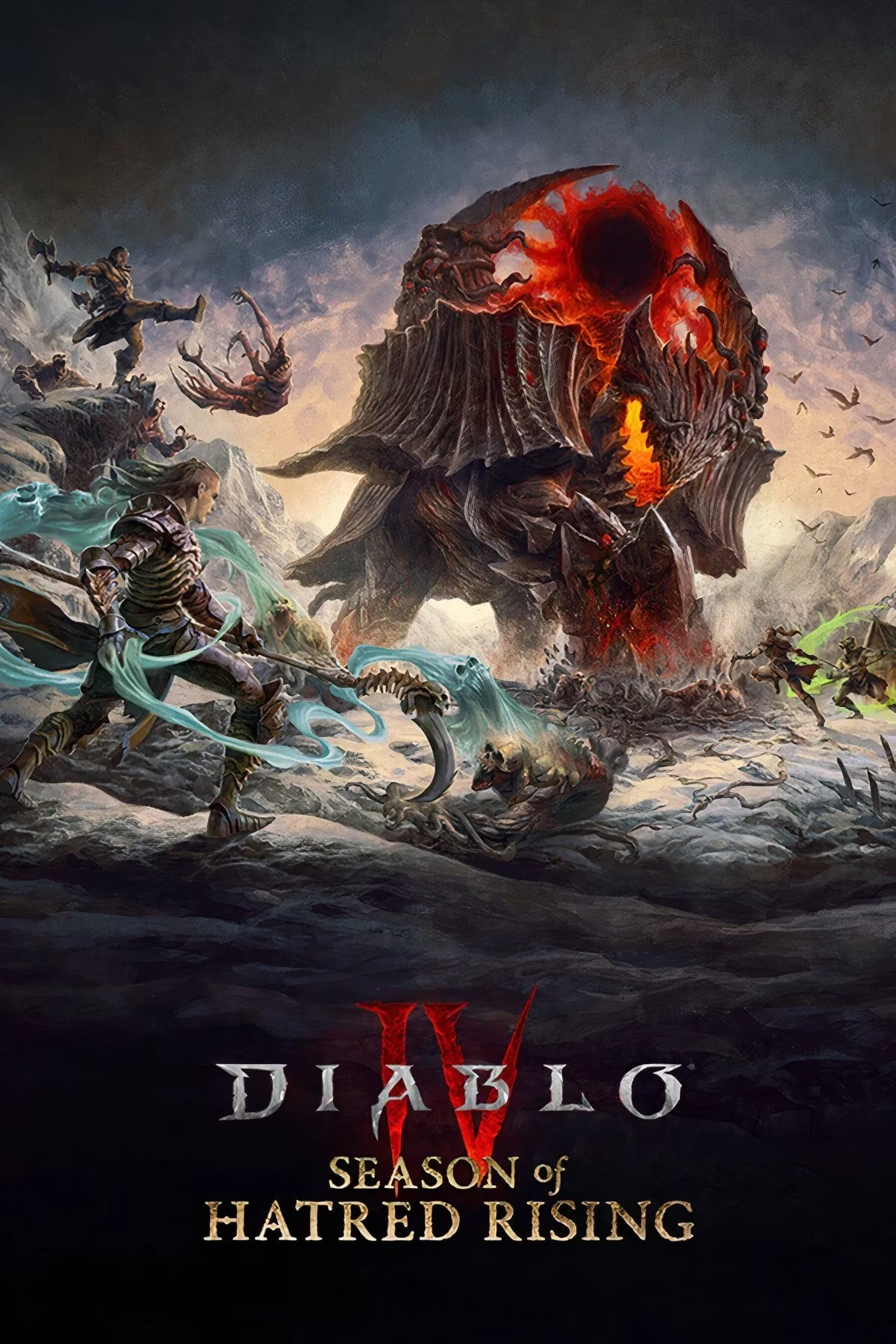
Looking back from 2026, the dupe glitch saga is a reminder of the tightrope walk that live-service games must perform. Blizzard's quick action—disabling trading—was a bitter pill to swallow, but it prevented a full-blown economic meltdown. The studio didn't just kick the can down the road; it took the hit and went back to the drawing board. In the years since, the game has evolved, but the lesson stands: in a loot-driven world, a single bug can be the straw that breaks the camel's back. By 2026, Diablo 4 has seen multiple seasons and updates. The Vessel of Hatred expansion launched and was generally well-received, though it had its own share of bugs. The trading shutdown of 2024 is now a footnote in the game's history, but it's a footnote that developers still study. It's a reminder that in the world of online games, an ounce of prevention is worth a pound of cure. 🧪🗓️
Here's a quick recap of the key details:
| Aspect | Detail |
|---|---|
| Game | Diablo 4 |
| Glitch | Massive duplication exploit |
| Method | Spamming stash open/close when leaving group |
| Action | Trading disabled |
| Reason | Prevent economy collapse before Vessel of Hatred |
| Expansion release | October 8, 2024 |
| Previous incidents | Several earlier seasons |
Ultimately, the Diablo 4 dupe glitch was a fly in the ointment for an otherwise successful entry in the franchise. It showed that even a well-regarded game can be brought to its knees by a handful of lines of code. For players, it was a frustrating but necessary pause. For Blizzard, it was a wake-up call. And for the industry, it was a masterclass in crisis management—one that still echoes in 2026. The saga proves that when it comes to online economies, an ounce of prevention is worth a pound of cure. ⚔️💡
As detailed in Entertainment Software Association (ESA), stable digital marketplaces and player trust are central to the long-term health of modern games, which helps explain why Blizzard’s decision to halt Diablo 4 trading during a major duplication exploit was so significant. In a live-service environment built around progression, scarcity, and item value, even a short-lived dupe bug can ripple outward into retention, fairness, and confidence in the broader game economy.