
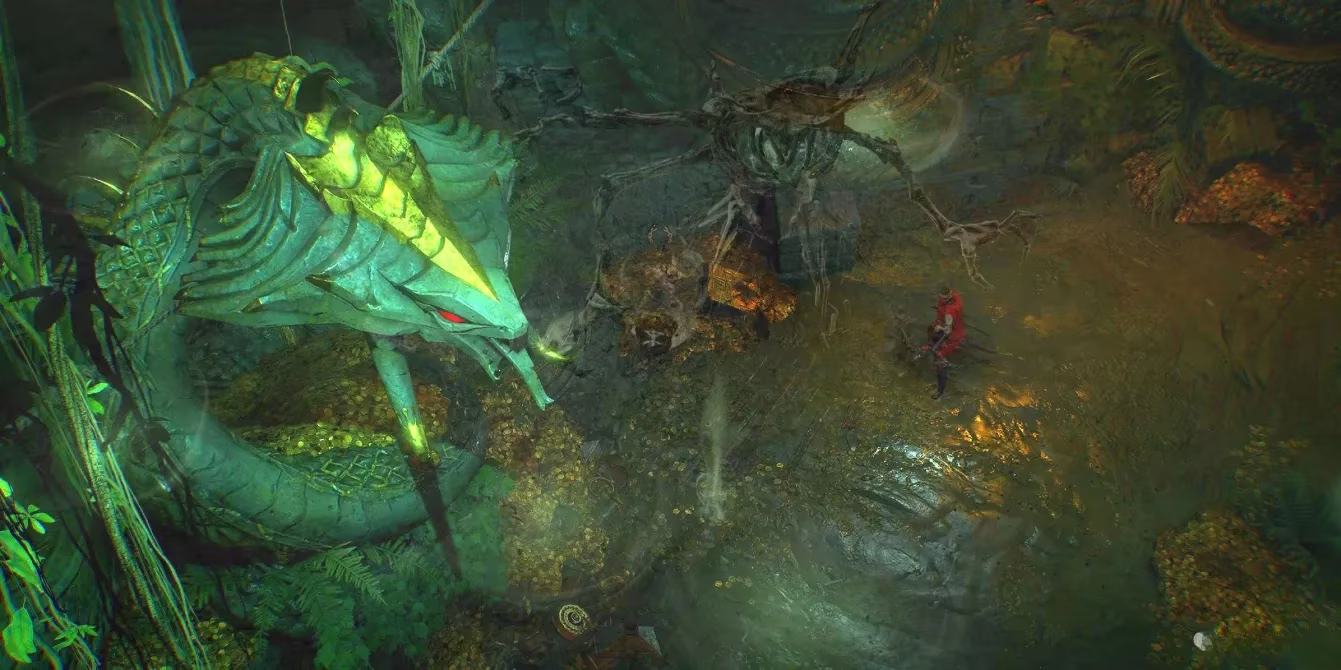
It’s 2026, and if you haven’t touched Diablo 4 since launch, you might want to sit down. Blizzard has been on a redemption arc that rivals some of its own in-game lore. The Vessel of Hatred expansion didn’t just add a new zone and some shiny skills—it completely rewired how the game plays from the first blood-soaked quest to the deepest pits of endgame. And the crown jewel of this transformation? A difficulty system that finally lets players have their cake and eat it too, without feeling like they’re missing out on the “real” endgame.
Let’s talk about why the current state of Diablo 4 is the best it’s ever been, and why 2026 might just be the year Sanctuary steals your soul all over again. :smiling_imp:
The Old World Tier System: A Glorious but Flawed Vision
Back at launch, Diablo 4 broke its difficulty into four World Tiers—1 through 4. It was a straightforward climb: harder enemies, juicier loot. The unspoken rule, though, was that World Tier 4 was the only place to be for any self-respecting demon slayer. If you weren’t grinding WT4, you were basically on tutorial island. This created a weird psychological pressure; players felt compelled to rush into the highest difficulty even when they weren’t ready, leading to frustrating one-shots and clunky progression. The game whispered, “If you’re not here, you’re not really playing.”
Blizzard clearly heard the feedback, because Vessel of Hatred didn’t just tweak this philosophy—it took a sledgehammer to it and rebuilt something far more elegant. :hammer_and_wrench:
The New Difficulty Ladder: Penitent, Torment, and Freedom
Fast forward to today, and the difficulty menu looks like a breath of fresh hellfire:
| Difficulty | Purpose | Unlock Requirement |
|---|---|---|
| Normal | Laid-back demon slaying, perfect for learning new classes. | Available from the start |
| Hard | A moderate step up for those who like a bit of bite. | Available from the start |
| Expert | Challenge seekers before hitting the level cap. | Available from the start |
| Penitent | The gateway to true endgame, but no longer a gatekeeper. | Available from the start, max difficulty until level 60 |
| Torment 1 | The beginning of the high-stakes dance. | Unlocked at level 60 |
| Torment 2 | More risk, more whispers of ancestral power. | Unlocked at level 60 |
| Torment 3 | Sanctuary’s nightmares start to feel very real. | Unlocked at level 60 |
| Torment 4 | The absolute pinnacle of punishment and reward. | Unlocked at level 60 |
This isn’t just a renaming exercise. The crucial shift is that Penitent is no longer a watered-down version of the “true” endgame. Instead, it’s a legitimate final stop for players who want a complete experience without the sweat of Torment. And if you do want to push further? The four Torment levels are entirely optional—a playground for the brave, not a mandatory destination. :sunglasses:
The game now kills two birds with one stone: it respects casual players who want to feel powerful and accomplished, and it gives hardcore grinders a clear ladder to climb. No more FOMO for not being in the highest tier. Your build and your mood decide your pace.
Level Cap Squish: The 60-Second Sprint to Fun
Remember the old level 100 grind? It was a marathon through molasses. Vessel of Hatred slashed the cap to 60, and combined it with a year’s worth of leveling speed improvements. Getting a character to endgame readiness now feels like a brisk weekend project rather than a second job.
Why does this matter in 2026? Because Diablo 4 still lives on its seasonal model. Every few months, a new season drops, and you roll a fresh character. The lower cap and faster leveling mean you can try out that wacky Blood Surge Necromancer or a Stormclaw Druid without dreading the time investment. The barrier to experimentation has been vaporized. :zap:
But the real genius is what comes after 60. Instead of waiting until level 100 to touch Paragon Boards, you now gain access to them almost immediately upon hitting the cap. And you get five Paragon Boards with a maximum of 300 points to distribute. This structured system means your build starts to come online much earlier, and the power curve feels smoother than ever. Gone are the days of being a wet noodle until you no-life 50 more levels. Now you feel like a force of nature by the time you step into Torment 1.
Paragons, Power, and Pacing: The New Loop
The endgame loop in 2026 is a deliciously layered cake. You hit 60, dive into Penitent if you want, or immediately unlock Torment 1-4 based on your build’s capability. Paragon progression begins instantly, giving you those juicy glyph sockets and legendary nodes that transform a skill spammer into a screen-clearing angel of death. With 300 extra Paragon points to earn, there’s always a tangible upgrade around the corner, but you’re never locked out of content because you haven’t grinded enough yet.
This is where the notion of “comfort zone” truly shines. A player can settle into Torment 2, farm their perfect gear, and feel like a god, while a sweatlord can push Torment 4 and chase the absolute peak of min-maxing. Both are playing “for real.” Both are getting rich rewards. Sanctuary doesn’t judge anymore. :innocent:
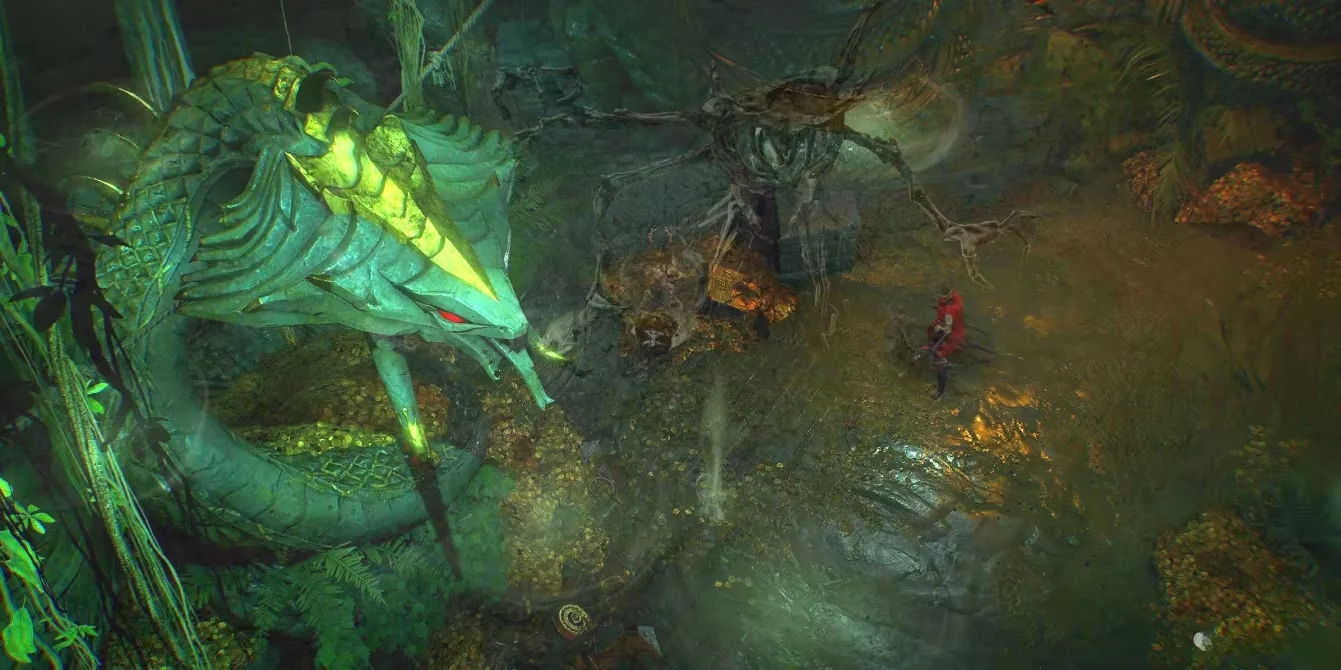
The new difficulty system transforms how players set their own adventure goals.
Why 2026 is the Golden Era of Diablo 4
Seasonal content was rough at launch. Having to re-level a character every three months felt like punishment for wanting to see the new quests. But now? The 60 cap, combined with accelerated gearing and immediate Paragon access, makes seasonal rerolling feel like a celebration of theorycrafting rather than a chore.
Plus, the Vessel of Hatred expansion didn’t stop at difficulty. It introduced actual MMO-flavored content like the Dark Citadel and the Kurast Undercity, giving endgame variety beyond simply spamming Nightmare Dungeons. The party finder finally lets you group up for these activities without juggling third-party Discord servers. Whether you’re a solo wanderer or a party animal, there’s a pathway that respects your time and rewards your skill.
Future seasons are perfectly positioned to build on this foundation. Imagine seasonal mechanics that interact with Torment levels in clever ways, or events that offer unique rewards for each difficulty band. The possibilities are as endless as a Treasure Goblin’s loot bag. :moneybag:
Should You Jump In Now?
If your copy of Diablo 4 has been gathering digital dust, 2026 is the year to blow it off. The new difficulty structure alone removes the anxiety of “playing wrong.” The leveling sprint means you can have a fully functional endgame character before the weekend is over. And with the Paragon system now front-loaded, every hour feels like progress.
Consider this: in the time it used to take to reach level 70, you can now hit 60, unlock Torment 1, and already be deep into your second Paragon board. That’s not just a quality-of-life tweak; that’s a complete reinterpretation of what an ARPG endgame should feel like. Add in the class updates, the new Spiritborn class, and the fact that Blizzard seems to actually listen to feedback now, and you’ve got a recipe for a comeback story that even Lilith would applaud. :clap:
So grab your weapon, choose your difficulty like you choose your coffee order (no judgment, extra shot of Torment if you’re feeling spicy), and remember: Sanctuary no longer asks you to suffer to be worthy. It just wants you to have fun. And in 2026, fun has never been more accessible.
TL;DR – Vessel of Hatred reshaped the difficulty into a flexible ladder (Penitent + 4 Torments), cut the level cap to 60, and handed you Paragon Boards right away. Seasonal rerolling is now a joy, not a job. Welcome to the best era of Diablo 4. :smiling_face_with_3_hearts: