
By 2026, Diablo 4's seasonal carousel has spun through many iterations, which makes Season 5's Hellbreaches feel like a fixed-address pressure cooker with a receipt: the heat is predictable, but the bill depends on how much risk a player adds. These were not roaming world bosses or Helltide sugar rushes. They were closer to Nightmare Dungeons with a seasonal pulse—three permanent map sites marked by the same dungeon icon and a green leaf. For anyone tracing Sanctuary's loot economy, that green leaf is a small, sharp hook.

Where the Breaches Sat
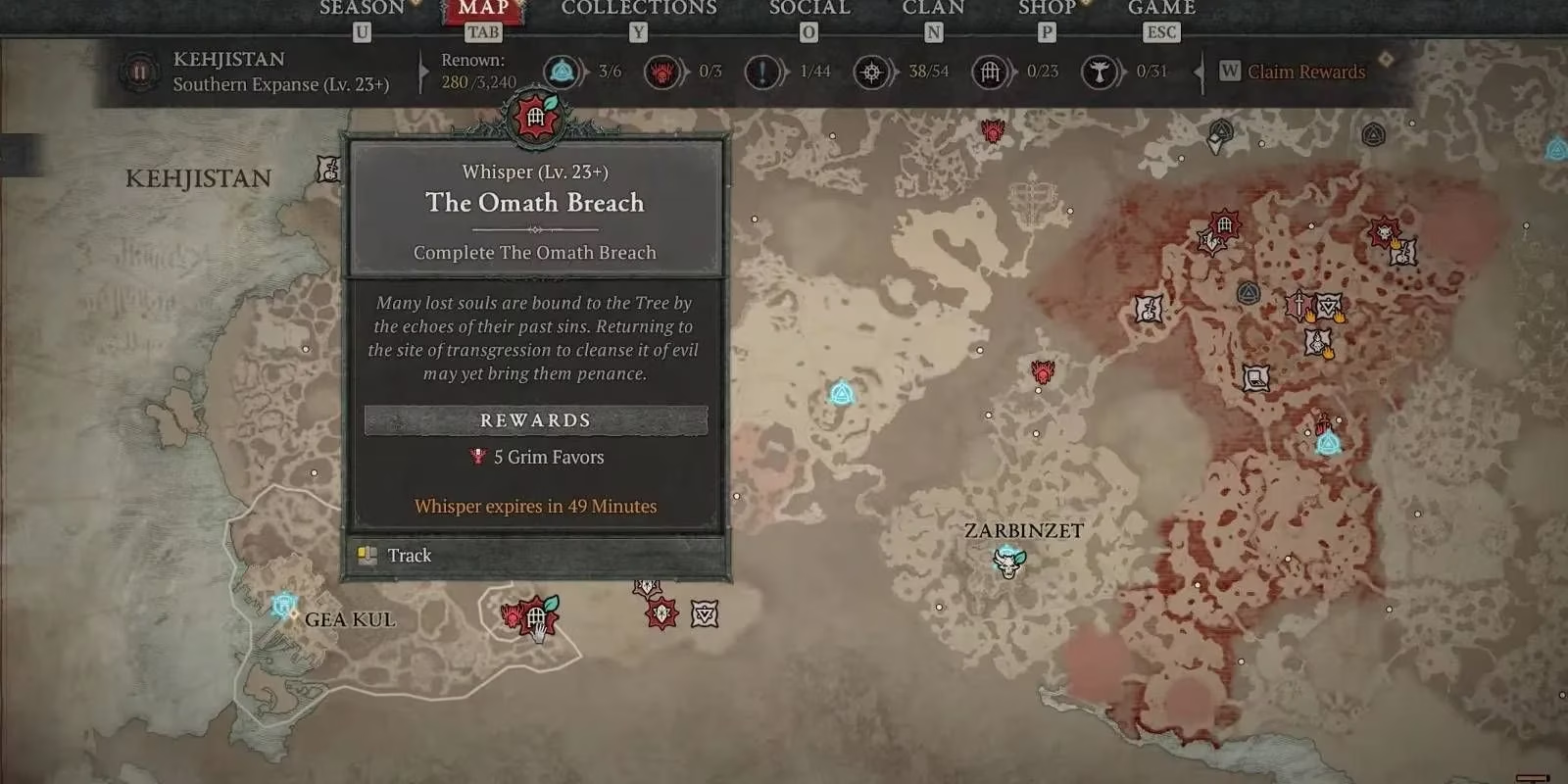
Season 5 placed three Hellbreaches on the seasonal map. They only appeared after a player had accessed Season 5 content, which meant finishing the base story first. The good news was that veterans could skip the campaign when rolling a new character, even on a higher World Tier, so the breach hunt did not require a second full pilgrimage through the story. The exact region names matter less than the fixed nature of the sites: players did not need to wait for a random spawn. They could open the map, look for the dungeon-style marker with the green leaf, and travel there.
| Detail | What it meant |
|---|---|
| Availability | After campaign completion and Season 5 access |
| Map marker | Dungeon icon with a green leaf |
| Count | Three fixed sites |
| Repeatability | Yes, players could re-enter completed breaches |
| Best use | Farming seasonal items and testing escalating builds |
How a Hellbreach Actually Played
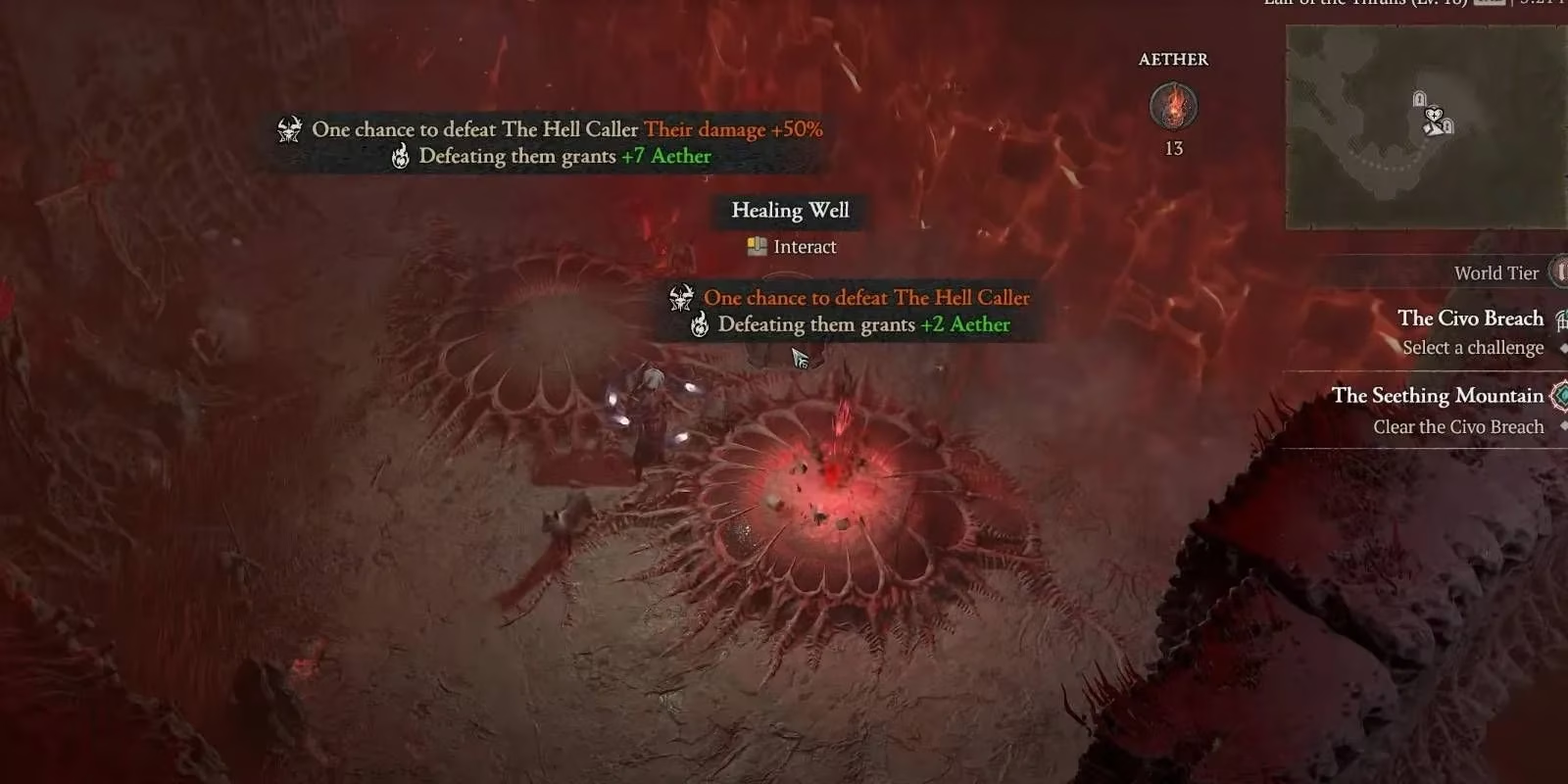
A Hellbreach borrowed the skeleton of Infernal Hordes: players fought waves of enemies in quick succession, cleared an objective, then chose whether to make the next room harder for better rewards. The difficulty escalation is a staircase made of loaded dice—each step is a gamble, but the landing is always a boss. Objectives varied. Some asked for enough of a certain item; others asked players to defeat enemies near a powerful structure that fed them strength. Once a goal was finished, the mode offered a choice: take a new challenge, crank up future rooms, and accept a sharper fight in exchange for a richer payout.
That risk-reward loop was the real engine. A cautious player could clear a Hellbreach with modest resistance, but the mode rewarded greed. Stronger enemies dropped more Burning Aether, and rarer Aether types could appear as objectives were met. The final boss was not just a wall; it was the receipt printer. The more heat a player had added, the more the dungeon could pay out.
Rewards and the Expensive Chest Rule
Burning Aether was the currency that determined a Hellbreach's final rewards. It behaved like a heat-shimmer ledger: every dangerous wave wrote another line, and the final chest read the balance. At the end of the run, the game presented Spoils of Hell or Spoils of Gold chests, typically three options at low, medium, and high rarity. The practical rule was simple: always go for the more expensive chest if the Aether allowed it. That chest had the best chance at rare Legendary items and even Unique gear introduced in Season 5. Season 5 also had a chance to drop Mother's Gifts as extra rewards, which made repeated clears more attractive.
| Reward | How it was earned | Practical note |
|---|---|---|
| Burning Aether | Enemy waves and objectives | More difficulty meant more or rarer Aether |
| Spoils of Hell | Spending Aether on chests | The expensive chest was the best bet |
| Spoils of Gold | Spending Aether on chests | Useful, but usually lower priority |
| Mother's Gifts | Chance-based seasonal extra | A reason to run breaches repeatedly |
Hellbreaches were not one-and-done dioramas. Players could challenge them multiple times, and a stronger build could push deeper into the escalation system for a larger Aether haul. That repeatability made the breaches a farming loop for seasonal gear rather than a single story beat.
A 2026 Lens on a 2024 Seasonal Curiosity
In 2026, Season 5 is no longer the live seasonal carousel; it is a historical exhibit. That does not make Hellbreaches useless to study. They show how Diablo 4 experimented with fixed-location, wave-based dungeons before and alongside Infernal Hordes, and they remain a clean example of the game's risk-for-reward language. Players revisiting old seasonal content should treat the green-leaf dungeon icons as the tell, skip the campaign if possible, and remember that the expensive chest is usually the correct answer. For everyone else, the Hellbreach is a reminder that Sanctuary's best loot often sits behind a door that asks for one more dangerous wave.