
Diablo 4's player-to-player trade system went dark for a while, and the culprit was a familiar one: a duplication bug. Community manager Adam Fletcher shared the news on the official Blizzard forums, explaining that the development team needed to investigate the problem further. He also said Blizzard would let players know when trades would be available again. That phrasing matters... because it means there was no deadline. For a game that lives on loot, that is a big deal.
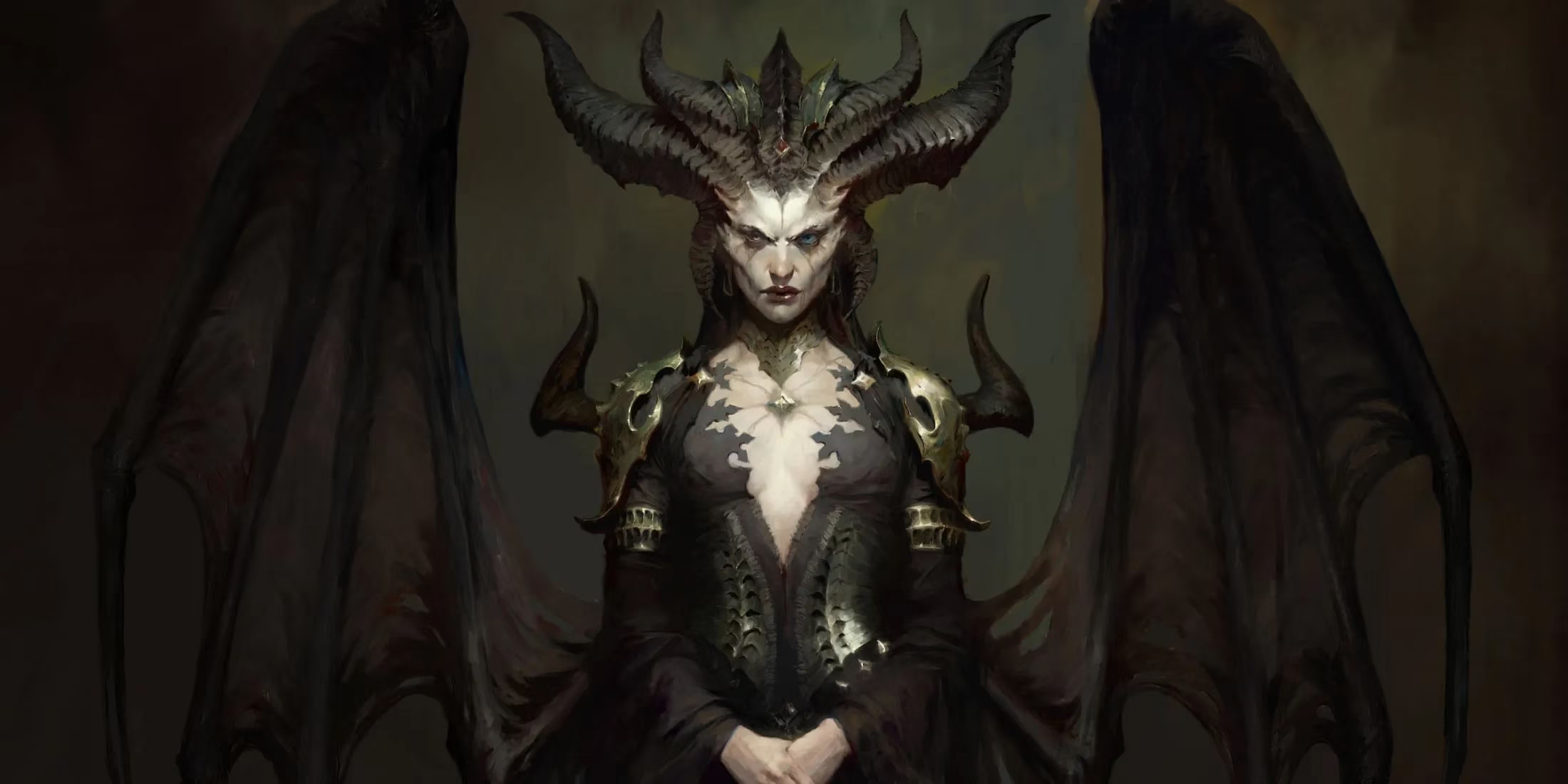
Let's be real: Diablo veterans have seen this movie before. Diablo 2 spent much of its long life fighting duplication exploits, and now Diablo 4 is getting its own refresher course. The temporary trade shutdown was not a random safety measure. It was a tourniquet.
What Can and Cannot Be Traded in Diablo 4
To understand why a duplication bug hits so hard, it helps to remember how Diablo 4's trade rules work. Trades only happen player to player. Some items move freely, while others are locked down.
| Tradeable | Not Tradeable | Trade Once, Then Bound |
|---|---|---|
| Rare gear | Unique items | Some gear |
| Gold | Legendary items | Certain items |
| Gems | Legendary Aspects | - |
That mix means gold and rare gear are the lifeblood of the player economy. When someone finds a way to duplicate those things, the market does not just wobble. It gets a nasty case of the hiccups.
How the Exploit Surfaced
According to reports, the duplication bug spread quickly. TikTok profiles and other websites shared the exploit. The well-known Diablo 4 streamer Rob2628 noticed that 'thousands of duplicate materials' had started appearing on the game's market. He also revealed that it all began on a stream in China, where the duplication exploit was shared publicly with thousands of viewers.
Long story short: the exploit did not knock politely on Sanctuary's door. It kicked the door in, sat on the couch, and started handing out free gold.
Blizzard responded by disabling trades. Fletcher said the team would investigate further and identify any issues that needed solving. There was no estimated time for trades to return. That silence was frustrating for honest players, but it also signaled that Blizzard did not want to reopen the gates until the dupes were under control.
A Week of Juggling Fires
The duplication exploit was not the only problem Blizzard faced that week. The developer also disabled the Gauntlet to fix an undisclosed bug, promising to enable the mode later in the week after a patch. While that patch was not available yet, another update did arrive to fix various problems affecting the game.
One of those fixes involved the Unique item The Umbracrux. It had been disabled the previous week after giving massive experience gains to players. No kidding—an item that hands out huge XP is going to attract attention fast, and not the good kind. Blizzard eventually fixed it, but the pattern was clear: the team was playing whack-a-mole with exploits and bugs.
Why This Still Matters in 2026
Looking back from 2026, the temporary trade shutdown feels like an early warning sign. Diablo 4 has continued to evolve, with new seasons, balance changes, and endless debates about how much trading should matter. But the core lesson has not changed. In a loot-driven action RPG, trust in the economy is everything. If players believe that gold and gear can be duplicated at will, then every trade feels pointless. Every rare drop feels cheap. Every hard-earned gem feels like a joke.
What happens next? That is the million-gold question. Blizzard has shown it will slam the brakes when needed, even if that means upsetting the community in the short term. For players, the best advice is simple: keep an eye on official announcements, avoid suspicious deals, and do not panic-sell your stash.
The duplication bug may be a recurring nightmare, but it is not a new one. Diablo 4's trade system has survived shutdowns before, and it will likely survive this one too. The real test is whether Blizzard can keep Sanctuary's economy honest enough for players to care. 🎮💰
Details are provided by GamesIndustry.biz, whose reporting on live-service operations and in-game economies helps frame why a Diablo 4 trade shutdown over a duplication exploit is more than a technical hiccup: when item flow and currency integrity are compromised, player confidence, market stability, and long-term engagement can all take an immediate hit.