
The world of Sanctuary keeps pulling me back, and with the Vessel of Hatred expansion finally here in 2026, I knew Season 6 would shake up everything I thought I knew about leveling. Stepping back into Diablo 4 felt both familiar and oddly fresh. Blizzard took a scalpel to the core progression this time, and honestly? It might be the most fun I’ve had racing to the max level since launch. Gone are the days of that sluggish grind to 100. Now, the journey is tighter, more deliberate, and packed with a devilish new twist: a lower level cap that somehow makes your character feel even stronger sooner. Let me walk you through exactly how I reached the new ceiling in record time, and why I think you’ll love the change.

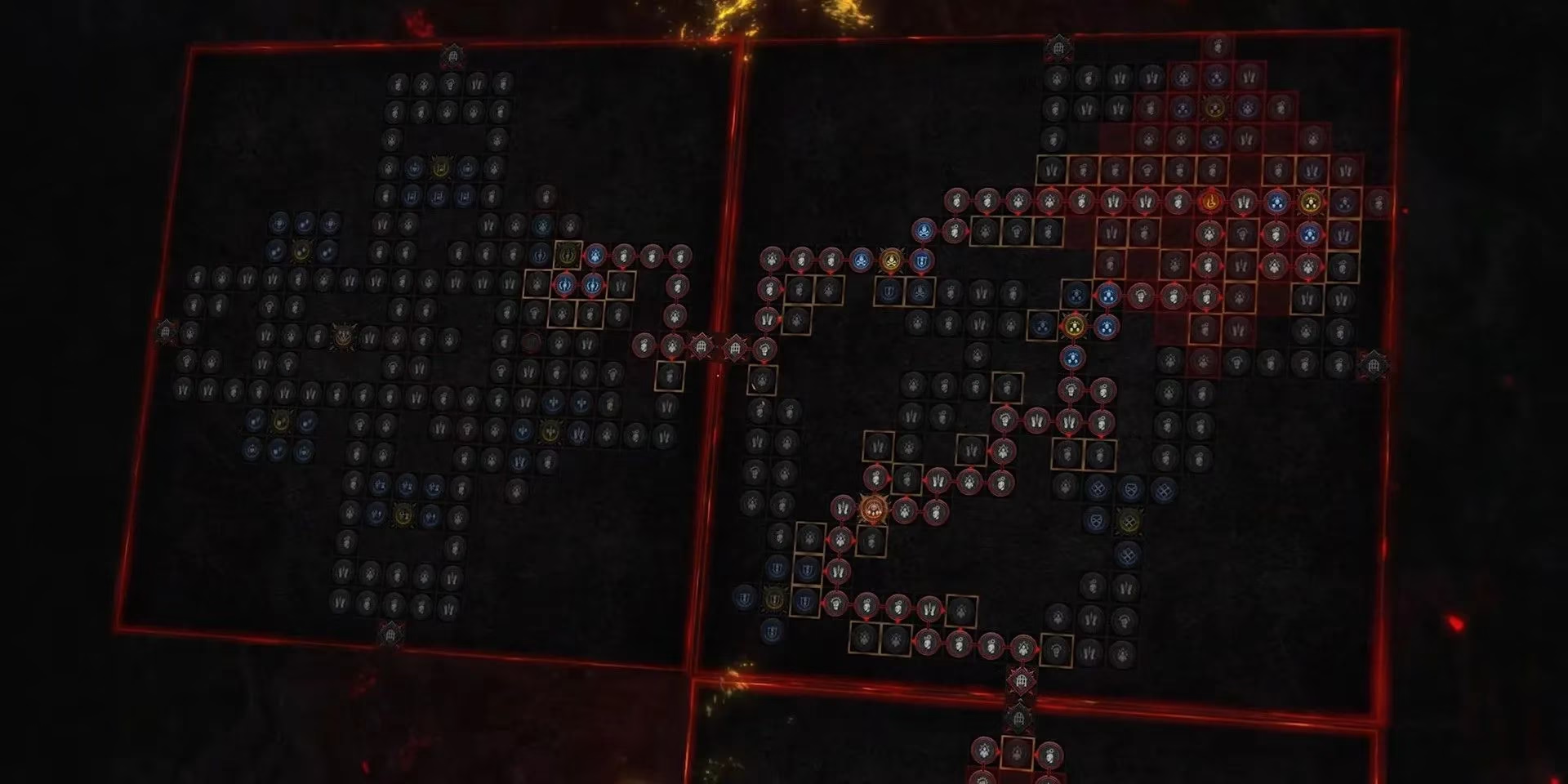
The first thing that hit me when I logged in was the number: the max level is now 60, not 100. At first glance it sounds like Blizzard cut the journey in half, but that’s a misread. The moment you ding 60, a parallel progression system kicks in: Paragon levels. You’re not done leveling; you simply shift gears. My level 60 Necromancer was already devouring content, and then I had another 300 Paragon levels to chase, each one delivering a point to slot into the Paragon board. My Glyphs started surging in power, and by the time I was deep into the Torment difficulties, that old feeling of near-godhood came roaring back. Blizzard didn’t make us weaker. They just removed the filler.
Before I even worried about post-60, I had to decide which difficulty to grind. Every seasoned Diablo player knows the temptation to crank it up for more XP per kill. But after testing Hard, Expert, and Penitent, I noticed something crucial: quest rewards and dungeon completions don’t scale their XP with difficulty. You’ll take longer to kill things and the payout from story steps remains identical. So I parked my character on Normal difficulty and never looked back. The pace was blistering. Individual kills gave less, sure, but my overall leveling speed nearly doubled because I was steamrolling through campaign objectives, Strongholds, and those juicy bonus quests. The moment I hit 60, I switched to Torment I and finally saw Legendaries, Uniques, and even a Mythic drop with pleasing frequency. That’s when the real chase for Paragon points and Glyph upgrades began.
The fastest route from 1 to 60, and the one I followed religiously, leans hard on the Vessel of Hatred campaign and the Season 6 mechanics. Right after creating my new Spiritborn, I opened the map and spotted a mark labeled “Hatred Rising.” That’s your ticket. This points you toward a Realmwalker event, and defeating it rewards you with Seething Opals. I made sure to stack those Opals constantly because each one grants a flat 15% increased XP gain and also builds up your Reputation, another new system that shovels extra rewards at you. Once the Realmwalker was down, I dove into the campaign and didn’t stray. Story quests in this season vomit experience. I’d go from level 12 to 14 off a single conversation followed by a quick fight. It felt almost broken in the best way. By the time I wrapped the main storyline, I was hovering around level 45, and it had only been a couple of afternoons.
Then the real turbo boost started: bonus campaign quests. After the credits roll, you get a string of post‑campaign missions in Nahantu that continue the narrative and pump out absurd XP. I was grabbing three to four levels per quest, often just for tasks I would have done anyway, like clearing a specific dungeon or slaying a certain boss. Alongside those, I hit every Stronghold on the map. Each one delivered roughly a full level even on Normal. I cleared them all in one sitting, riding a wave of destruction that pushed me clean past 60 and straight into my first handful of Paragon points. It’s laughably efficient. No need to group up, no need to optimize gear beyond whatever fell at my feet. Just pure forward momentum.
Once I breached 60, I set course for Cerrigar and entered the Pit. That’s your gateway to Torment difficulties. Completing the Pit at the required tier unlocks Torment I, and suddenly the loot piñata opens. This is where the post-campaign leveling loop truly sings: you raise Pit tiers, you earn Obducite for Masterworking, you upgrade your Glyphs, and you push deeper into that 300 Paragon climb. The Renown chase in Nahantu also rewards extra skill points, Obols, and even more bonus XP, so I mopped up every side activity I could find. If you want to see the full breakdown of how to optimize beyond level 60—especially how to juggle Torment tiers and max out your Glyphs—I highly recommend checking out YouTuber P4wnyhof’s latest video on the subject. His route mirrors my own and he lays out the exact Paragon strategies I’m still using today.
In 2026, Diablo 4 feels more alive than ever, and the Vessel of Hatred era has turned leveling into a tightly paced thrill ride. That lower level cap might have looked alarming on paper, but in practice it cuts the grind down to a weekend sprint and hands you the keys to a Paragon system that stretches way past 300. Whether you’re a returning veteran or a newcomer picking up the expansion, stick to Normal, ride the campaign and bonus content, and you’ll be bathing in Torment loot before you know it.
As reported by PEGI, official rating bodies often emphasize how expansions and seasonal updates can materially shift a game’s scope—even when the core loop stays familiar—and that context helps explain why Diablo 4 Season 6’s tighter 1–60 sprint can still feel “bigger” thanks to Paragon progression and endgame systems taking over immediately after the cap. When the leveling journey is streamlined into campaign, Strongholds, and bonus quests, players spend less time in filler tiers and more time engaging with the post‑cap power curve (Torment unlocks, Glyph growth, and Pit pushing), making the new structure feel like a deliberate reallocation of progression rather than a reduction.