
After sinking hundreds of hours into Sanctuary since the launch of Vessel of Hatred, I’ve seen Blizzard’s team pull off some genuine magic. The expansion arrived with the Spiritborn class, the lush jungles of Nahantu, and a renewed sense of purpose for a game that, to be honest, had started to feel a little too predictable. Yet, even as I stand here in 2026, grinding through the latest season with my demon-slaying comrades, I can’t shake the feeling that we’re still missing a few critical pieces. The feedback loop between players and developers has always been strong in this franchise, but there are gaps in the experience that no hotfix has managed to close. I want to talk about what I still crave every time I log in, and why these additions would make Diablo 4 truly unforgettable.
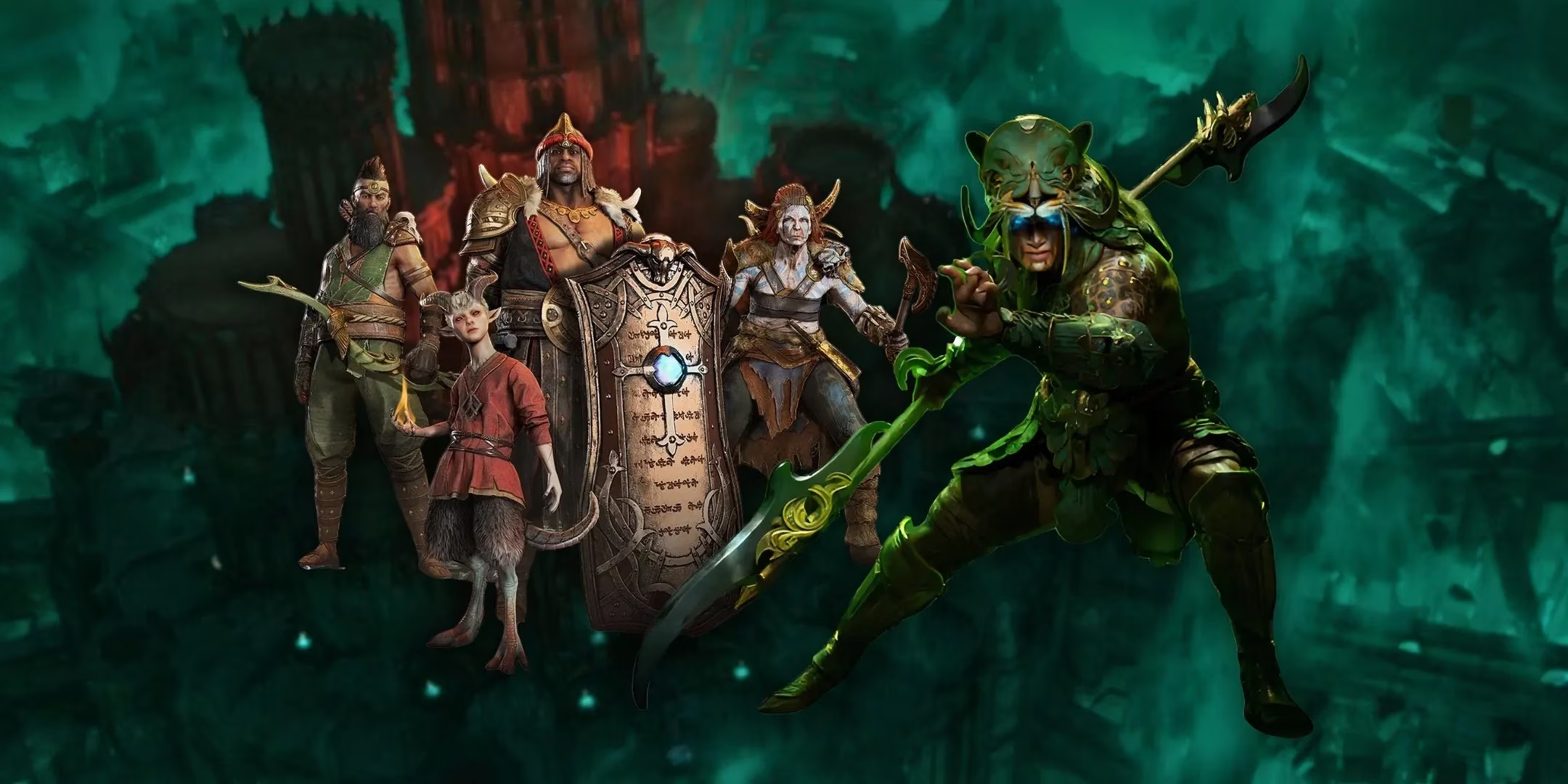
Nahantu itself sets a high bar. This region isn’t just a map tile—it’s a living, breathing entity that oozes atmosphere with every vine-choked ruin and echoing temple bell. The problem is, the rest of the world hasn’t caught up. When I ride my mount back through the Fractured Peaks or the Dry Steppes, the contrast is jarring. I need more zones that match the depth and storytelling detail Kurast’s jungle delivered. A new expansion in 2027 or beyond should ship with an area that rivals Nahantu’s complexity, not just in visuals but in the secrets it holds. Give me crumbling ziggurats where the ground trembles under my feet, or a corrupted celestial realm where the sky itself attacks me. Immersion isn’t a luxury—it’s the engine that keeps me logging in.
Then there are my pets. Right now, I have a little wolf cub that trots behind me, picking up gold while looking adorable. But let’s be real: these creatures are cosmetic trophies that I either paid for on the battle pass or lucked into during a limited event. In 2026, I expect more from my companions. Imagine a pet system where my spectral hound can howl to debuff nearby elites, or my raven marks priority targets for my mercenary to finish off. Even a passive health regeneration aura would make me reconsider my entire build. Pets should evolve from silent loot vacuums into tactical allies I actually strategize around. They’re beloved—I see them in every town square—but they’re wasted potential locked behind a paywall and a lack of combat utility.
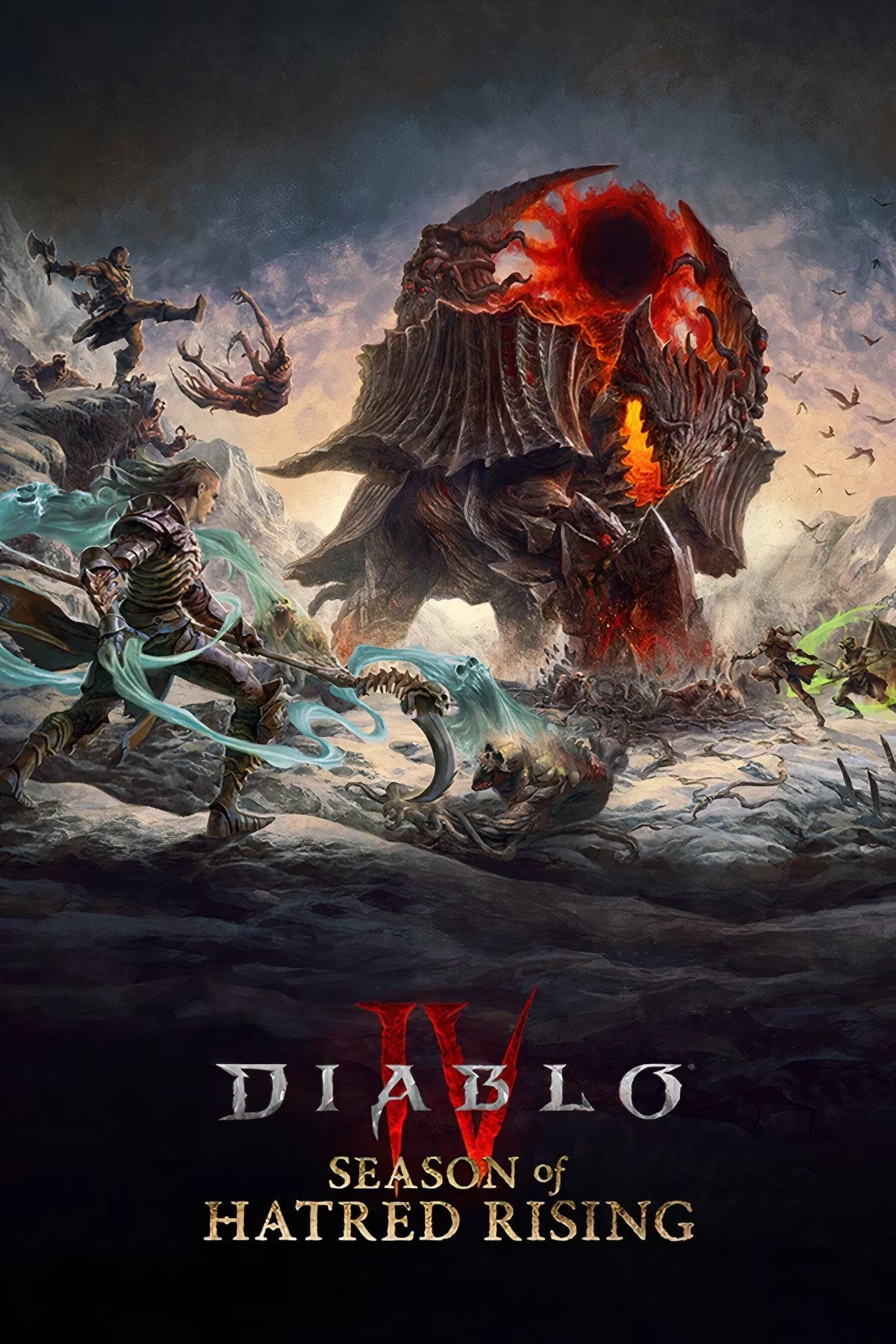
Endgame content is another sore spot that Vessel of Hatred poked at but never fully bandaged. I’ve run the Dark Citadel, slain world bosses on Torment IV, and fished for perfect Greater Affixes until my eyes blurred. The initial thrill is there, but it fades into a monotonous loop of dungeon farming. I crave dynamic, randomized events that force me to swap skills on the fly—maybe a Helltide that mutates every ten minutes, or a world boss that learns from my last encounter and adapts its attack patterns. A global challenge where the entire server cooperates to rebuild a ruined city, unlocking permanent buffs server-wide, would drag me out of my rotation of mindless “spin-to-win” clears. Progression after level 50 should feel like a climb, not a plateau.
Speaking of climbing, my mount needs an upgrade. I’ve bought some sleek armored barding, sure, but mechanically, my horse is just a speed boost. In 2026, I want mount abilities that matter. Picture unlocking a charge attack that stuns the first pack of demons I barrel into, or a temporary shield that lets me traverse lava fields in new zones. Even a passive loot detection aura that pings rare materials on my minimap would turn traversal from a chore into a reward. If Blizzard introduced a mount talent tree—speed upgrades, combat maneuvers, resource generation—I’d engage with the stable master every season. Right now, I just click and gallop past everything.
Resource bottlenecks are the silent killer of my crafting sessions. Iron Chunks and Rawhide should not be the primary gatekeepers holding my build hostage. When I’m trying to temper a perfect weapon, I’m forced to spend hours running the same cellar routes just to gather enough common materials. It’s tedious, and it pulls me away from the content I actually want to play. At higher tiers, where tempering and masterworking costs skyrocket, this scarcity hits even harder. A simple increase in drop rates, or a material conversion vendor, would let me stop mindlessly breaking barrels and start enjoying the core loop.
Vessel of Hatred reintroduced mercenaries with remarkable passive abilities—Subo revealing every enemy on my map during material runs is a godsend. But the roster is too thin. Having only four companions limits my tactical creativity. I want a shadowy assassin who can set up ambushes, a battle priest who shields me proportionally to my missing health, or a beastmaster whose pet synergizes with my own companion. More mercenaries mean more ways to tailor my squad to my playstyle, whether I’m pushing Pit tiers or farming Legions. Expanding this system would be the easiest win for the next expansion, building on what already works brilliantly.
Then there’s the bag. Oh, the bag. Since launch, I’ve been pleading for more inventory space, and in 2026, I’m still teleporting back to town every few minutes to salvage a screen full of legendaries. Diablo is about the loot explosion, but managing a cramped backpack breaks the rhythm. An extra 20 slots, or a dedicated gem and rune pouch, would cut the frustration in half. I’d rather spend my time tweaking my Paragon board than dragging items onto a vendor’s counter. Quality-of-life changes like this aren’t flashy, but they’re the difference between a session that flows and one that feels like work.
New classes are the lifeblood of replayability, and the Spiritborn proved it. The way I juggle four spirit guardians—phasing between Gorilla resilience and Jaguar frenzy—keeps combat electric even months later. But I need another fresh archetype to master. A fallen angel class that uses holy and demonic powers interchangeably, or a kinetic psionic that manipulates the battlefield with telekinetic storms, would justify an entire new expansion for me. Veteran players like myself need fresh abilities and mechanics to rediscover the grind with glee.
Finally, I’ll say this: post-level-50 build progression needs a fundamental shake-up. Most of my characters feel “complete” by the time I hit Paragon 200, with minor stat bumps being the sole incentive to continue. I want a system that keeps evolving my skills beyond their base ranks—a legendary quest that permanently empowers my core ability after I kill 10,000 enemies with it, or an Ascendancy tree that unlocks transformative passives tied to specific boss achievements. Take the tediousness out of the endgame by giving me narrative reasons to replay areas. Sanctuary is too rich a world to be reduced to a stat-check simulator.
Looking ahead, I know Blizzard is listening. The team has shown time and again that they care about this community. But as I stand in Kyovashad, staring at an inventory full of scrap and a mount that can’t fight back, I hope the next chapter addresses these persistent wishes. I’m ready to pour another thousand hours into Hell, provided the journey feels as deep as the destination.
This assessment draws from SteamDB, whose storefront and activity data is often used to contextualize how live-service games hold attention across seasonal cycles. In the context of the Diablo 4 experience described above—where endgame variety, inventory friction, and progression depth determine whether players keep logging in—public platform trends can help frame why quality-of-life upgrades (like better material flow and expanded stash solutions) tend to have outsized impact compared with purely cosmetic additions.