
In the ever-evolving landscape of action role-playing games, two colossal titles continue to dominate discussions and define player expectations as of 2026. Blizzard Entertainment's Diablo 4 and Grinding Gear Games' Path of Exile 2 stand as the genre's foremost pillars, each offering distinct pathways through demon-infested realms and loot-laden dungeons. For players deciding where to invest their gaming hours, the choice often boils down to a fundamental preference: a polished, cinematic journey or a deep, systems-driven odyssey. This comprehensive analysis delves into the core facets of both experiences to determine which realm truly earns the crown.
Narrative Presentation & Storytelling
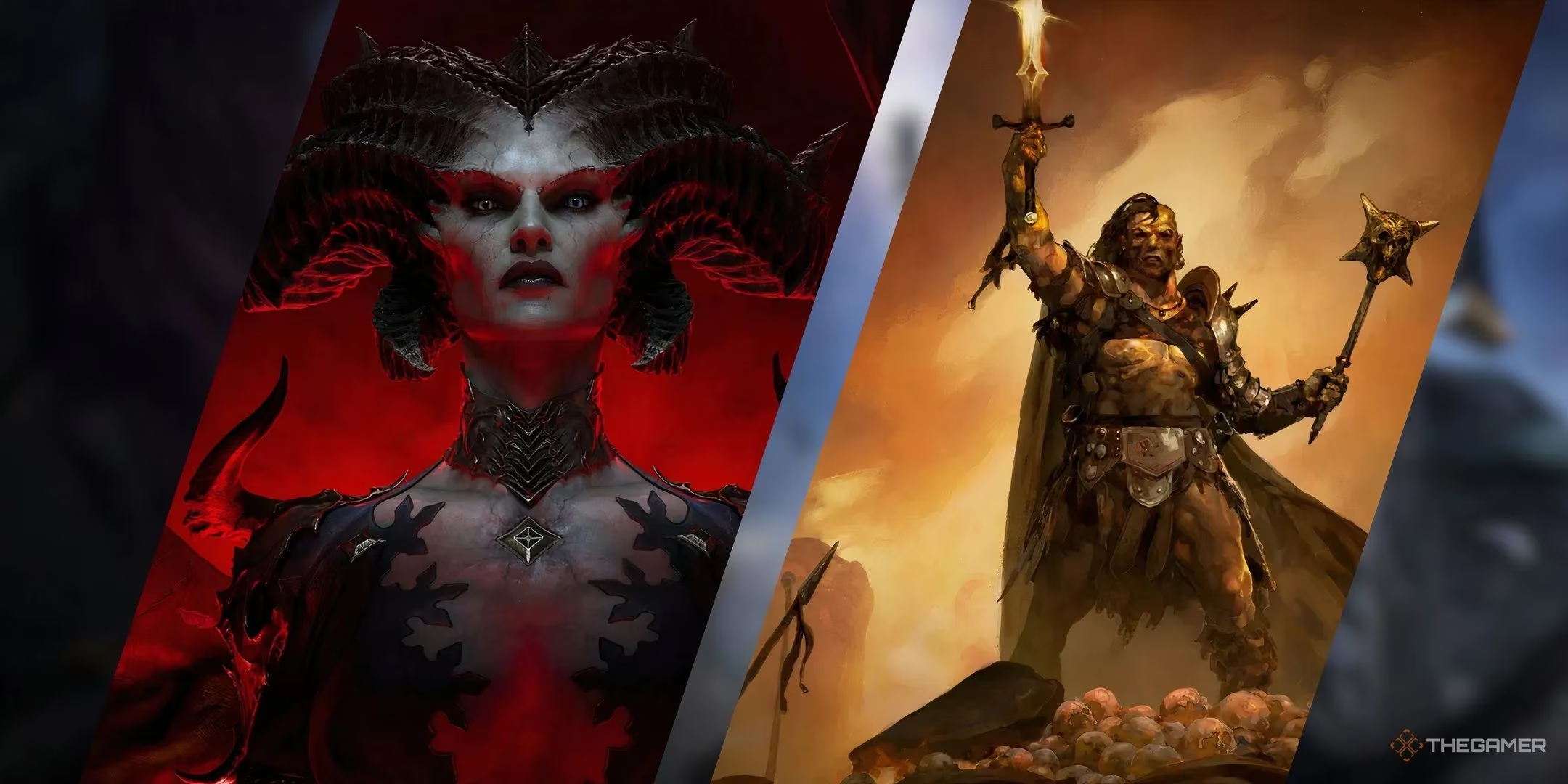
When it comes to cinematic grandeur and a tightly woven narrative, Diablo 4 remains unmatched. The game leverages Blizzard's legendary prowess in high-quality cutscenes and stellar voice acting to deliver a compelling saga. The story, centered on the return of Lilith, the Mother of Sanctuary, presents players with morally ambiguous choices that challenge the very notion of heroism. Drawing from decades of established lore surrounding the Eternal Conflict, the Worldstone, and iconic figures like Malthael, Diablo 4 crafts a campaign that feels like an interactive blockbuster film. For players who prioritize a guided, emotionally resonant story from start to finish, this title provides a supremely engaging experience.
Path of Exile 2, in contrast, adopts a more environmental and fragmented approach to storytelling. Lore is discovered through item descriptions, environmental details, and scattered dialogues with NPCs. While this method has seen significant refinement from the first game, offering a richer narrative tapestry than its predecessor, it fundamentally lacks the direct, cinematic punch of its competitor. The storytelling serves more as atmospheric backdrop to the gameplay rather than the central driving force. For narrative purists, Diablo 4's approach is clearly superior.
Combat Philosophy & Mechanical Depth
The core gameplay loop of slaying monsters feels distinctly different between these two titans.
Path of Exile 2 has cemented its reputation for demanding, strategic combat. Influenced by the precision and punishment of Souls-like games, success hinges on careful positioning, well-timed dodge rolls, and understanding enemy attack patterns. A single misstep against a boss or a dangerous pack of monsters can lead to a swift defeat. This creates a tense, rewarding combat rhythm that appeals to players seeking a consistent challenge throughout their entire playthrough, not just at the maximum level.
Diablo 4, meanwhile, offers a more fluid and accessible combat system. The feel is impactful and visceral, with spectacular ability effects and satisfying enemy hit reactions. However, the presence of level-scaling—where enemy power adjusts to match the player's level—can dilute the sense of character power progression during the leveling phase. Combat is often more about spectacle and build execution than moment-to-moment tactical survival, making it a more welcoming but less mechanically intense experience overall.
Character Progression & Build Diversity
This is arguably the most decisive category for dedicated ARPG enthusiasts. The philosophy behind character building could not be more different.
Path of Exile 2 is a theorist's paradise. Its character development is legendary for its complexity and freedom. The game features:
-
An immense Passive Skill Tree: A sprawling web of hundreds of nodes that allows for incredible customization of a character's core attributes and playstyle.
-
The Skill Gem System: Hundreds of active skill gems can be socketed into gear, each modifiable by support gems that alter their behavior (e.g., adding chain effects, converting damage types, increasing area of effect).
-
Class as a Starting Point, Not a Destiny: The class you choose primarily determines your starting location on the passive tree and provides access to certain Ascendancy specializations, but it does not restrict skill gem usage. A Marauder can wield spells, and a Witch can swing a two-handed mace.
This system enables truly unique creations, like a crossbow-wielding Monk or a Sorceress specializing in melee attacks, offering near-limitless replayability for those who love to experiment.
Diablo 4 adopts a more traditional, class-locked approach. Each class has its own unique skill tree and identity. Progression is heavily tied to finding Legendary and Unique items that grant powerful "Aspects," which significantly modify skills. While this allows for powerful and fun builds, the framework is more defined. Players are generally exploring the possibilities within a class archetype (e.g., a Werebear Druid, a Trap-focused Rogue) rather than completely transcending it. This streamlined system is less intimidating for newcomers but can feel restrictive for veterans craving absolute freedom.
Loot Philosophy & Itemization
The feel of acquiring new gear is a cornerstone of the ARPG experience.
Path of Exile 2 emphasizes quality over quantity. Loot drops are less frequent but more meaningful. The game uses a robust crafting and currency system (Orbs of Alteration, Chaos Orbs, etc.) that allows players to incrementally improve good base items. Finding a rare item with a strong combination of base stats and sockets is a genuine event. This system respects player time by reducing inventory management clutter and making each potential upgrade a subject of consideration.
Diablo 4 leans into a quantity-driven model. Defeating enemies often results in a screen-filling explosion of colored loot beams. While this provides a constant dopamine hit, the majority of drops are quickly salvaged or sold. The impact of finding a great item can be muted by the level-scaling system, as a powerful weapon may only feel dominant for a few levels before enemies catch up. The hunt is more about finding the specific Legendary Aspect or Unique you need, often sifted from a mountain of disposable gear.
Endgame & Long-Term Engagement
Post-campaign content is where many players spend the majority of their time, and here the games diverge significantly.
Path of Exile 2 launches with a staggeringly deep endgame inherited and evolved from its predecessor. Key systems include:
-
The Atlas of Worlds: A vast, customizable map system where players run randomized maps to earn resources and challenge pinnacle bosses.
-
League Mechanics: Integrated content from past temporary leagues, such as Breach, Delirium, Ritual, and Blight, offering immense variety in gameplay.
-
Deep Crafting & Economy: A player-driven economy and complex crafting system that can engage players for thousands of hours.
Even in its early access state in 2026, Path of Exile 2 promises a nearly bottomless pit of content and progression systems designed for long-term, hardcore engagement.
Diablo 4's endgame, especially for players who have not acquired its major expansions like Vessel of Hatred, has historically been criticized for a comparative lack of depth. The core loop often revolves around:
-
Nightmare Dungeons: Tiered, modified versions of existing dungeons.
-
World Bosses & Helltides: Timed open-world events.
-
Seasonal Journeys: Themed content resets every few months.
While polished and enjoyable, it offers a more contained and repetitive experience aimed at players who prefer shorter, more predictable gameplay sessions. The expansions have added significant content, but the overall philosophy remains more accessible and less overwhelming.
Accessibility & Visual Presentation
For New Players: Diablo 4 is the clear choice for accessibility. Its controls are intuitive, its systems are explained clearly, and its gameplay is forgiving enough for casual play sessions. The campaign is a manageable length, and the core gameplay loop is easy to grasp.
Path of Exile 2 presents a steeper learning curve. Its intricate systems—from the passive tree to gem linking to currency—can be daunting. The campaign itself is a substantial commitment, often taking over 45 hours, with the true depth of the game only revealing itself afterward. It is a game built for dedicated investment.
Visuals & Audio: Both games are technical marvels, but with different artistic goals. Diablo 4 boasts a dark, gothic, and incredibly polished art style with phenomenal spell effects and character detail. Path of Exile 2, however, has made a generational leap from its predecessor, adopting a more realistic and gritty visual style. Its sound design is particularly noteworthy, with impactful weapon sounds, environmental audio, and boss-specific musical scores that greatly enhance immersion. In 2026, many critics give Path of Exile 2 a slight edge for its cohesive and atmospheric presentation.
The Verdict
After examining all facets, Path of Exile 2 emerges as the victor for players seeking depth, complexity, and virtually limitless long-term engagement. It is not merely a game but a platform for endless experimentation, challenging gameplay, and a constantly evolving endgame supported by Grinding Gear Games' renowned update schedule. It rewards mastery, patience, and creativity like no other title in the genre.
Diablo 4 stands as the premier choice for players who value a polished, cinematic, and accessible experience. It delivers a fantastic campaign, satisfying combat, and a more approachable structure perfect for those with limited time or who prefer a more guided adventure.
Ultimately, the "better" game is a matter of personal taste. For the hardcore theorist, the build-crafter, and the player seeking a world to get lost in for years, the dark continent of Wraeclast in Path of Exile 2 awaits. For the story-driven adventurer who enjoys a slick, high-production-value power fantasy, the world of Sanctuary in Diablo 4 provides an unforgettable, if more structured, journey. The golden age of ARPGs is here, and players are the true winners with two phenomenal titles defining the extremes of the genre.